
Arabica vs Robusta: which coffee beans should you buy? Pick up almost any bag of coffee and you will see one of two words: Arabica or Robusta. They are the two coffee species that make up nearly all the coffee drunk in the world, and they taste remarkably different. Knowing the difference between Arabica and Robusta helps you choose beans you will genuinely enjoy, and it explains why so many Italian espresso blends use a little of both.
What is Arabica coffee?
Coffea arabica is the most widely grown coffee species. It thrives at higher altitudes in cooler climates, grows more slowly and is more delicate, which makes it more demanding to farm.
That slow growth pays off in the cup. Arabica coffee beans tend to have:
- More natural sweetness and acidity
- Complex aromas such as fruit, flowers, citrus, chocolate and nuts
- A lighter, smoother body
- Roughly half the caffeine of Robusta
What is Robusta coffee?
Coffea canephora, known as Robusta, lives up to its name. It grows at lower altitudes, tolerates heat and resists pests, and it yields more coffee per plant.
Robusta coffee beans tend to offer:
- A fuller, heavier body
- Earthy, woody, cocoa and dark chocolate notes
- Less acidity and more bitterness
- Thick, long-lasting crema in espresso
- Considerably more caffeine
Robusta is sometimes dismissed as the cheaper bean, but high-quality, carefully processed Robusta is prized in Italy precisely for the body and crema it brings.
Arabica vs Robusta at a glance
- Flavour: Arabica is sweet, aromatic and bright. Robusta is bold, earthy and bitter-sweet.
- Body: Arabica is lighter. Robusta is fuller.
- Crema: Robusta produces more and longer-lasting crema.
- Caffeine: Robusta contains roughly twice as much.
- Milk drinks: Robusta’s body helps coffee cut through milk.
Why Italian espresso uses an Arabica Robusta blend
Italian roasters have long believed that the best espresso comes from balance rather than purity. An Arabica Robusta blend combines Arabica’s aroma and sweetness with Robusta’s body, crema and gentle bitterness. The proportion changes the character:
- Kave is 90% Arabica and 10% Robusta: chocolaty, nutty and elegant, with just enough body.
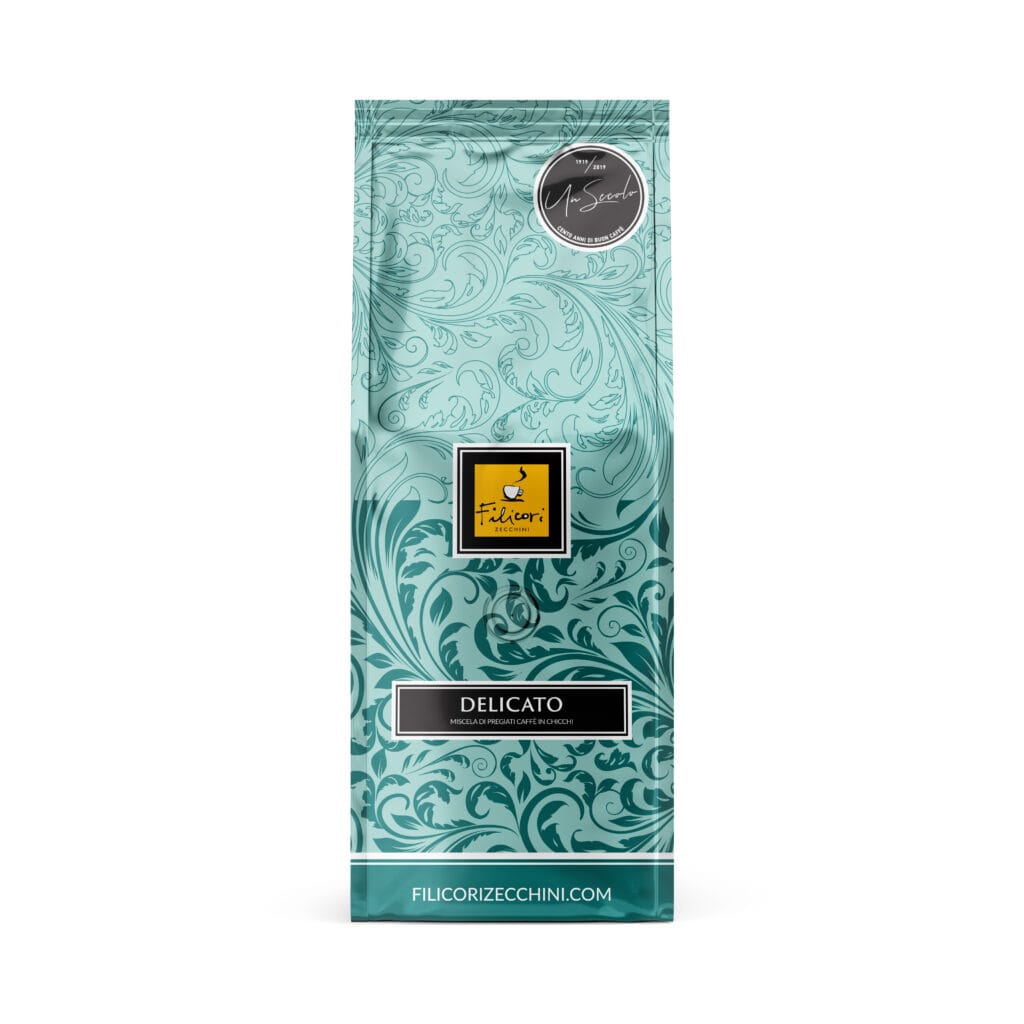
- Delicato and Forte are 80% Arabica and 20% Robusta. Delicato is a smooth medium roast, Forte a dark roast with nutty, malty notes.
- The Espresso Blend goes to 70% Arabica and 30% Robusta for a classic Italian bar espresso with plenty of crema.
- Chicchi Blend 500g is 80% Arabica and 20% Robusta with a smooth, chocolatey profile.
When to choose 100% Arabica coffee beans
If you drink your coffee black, or love tasting the subtle notes of different origins, 100% Arabica coffee beans are a lovely choice. Our 100% Arabica whole bean coffee offers citrus, ginger and jasmine, while 100 Percento Arabica brings chocolate, dried fruit and floral notes. For a single-origin experience, Grand Cru Guatemala shows off vanilla, almond and candied lemon.
When to choose Robusta
Robusta on its own is less common, but a high-quality single-origin Robusta can be a revelation. Grand Cru India is an Indian Robusta with dark chocolate, caramel and honey notes, far from the harsh stereotype. It is a good choice if you like an intense, low-acidity cup.
Is Arabica or Robusta better for espresso?
There is no single right answer, because it depends on how you take your coffee:
- Black espresso lovers who enjoy brightness and aroma often prefer 100% Arabica.
- Cappuccino and latte drinkers usually prefer a blend with Robusta, which keeps the coffee flavour present under the milk.
- Anyone who loves crema will appreciate a higher Robusta share.
The best way to decide is to taste side by side. Try a 100% Arabica and a 70/30 blend on the same morning and notice the difference in body, crema and finish.
What about caffeine?
If you are sensitive to caffeine, high-Arabica coffees are the gentler option, and for evenings you can turn to Kave Decaf. If you want a stronger kick, a blend with more Robusta will give it to you naturally.
Arabica vs Robusta FAQ
Is Robusta bad coffee?
No. Low-grade Robusta can taste harsh, but quality Robusta adds body, crema and depth, which is why it has a place in classic Italian blends.
Why is Arabica more expensive?
It grows at higher altitudes, yields less and is more vulnerable to pests and climate, so it costs more to produce.
Can I find Arabica and Robusta coffee beans in the UK easily?
Yes. Our full range of Arabica and Robusta coffee beans is roasted in Italy and delivered across the UK, free on orders over £19.
Related guides: the best coffee beans for bean to cup machines and what is specialty coffee.
The bottom line
Arabica brings aroma and sweetness, Robusta brings body and crema, and Italian blends bring the two together. Start with the drink you love most, use the guide above and explore our coffee beans to find your perfect balance.