
Good decaf coffee beans let you enjoy a proper Italian coffee in the afternoon, after dinner or whenever you would rather skip the caffeine, without settling for a flat, papery cup. Decaf has a reputation for tasting dull, but most of that comes down to the coffee you start with and how you brew it. In this guide we explain how decaffeinated coffee is made, how much caffeine is really left, how to choose decaf coffee in the UK and how to get the best from it at home, whether you use an espresso machine, a moka pot or a Nespresso-compatible capsule machine.
What are decaf coffee beans?
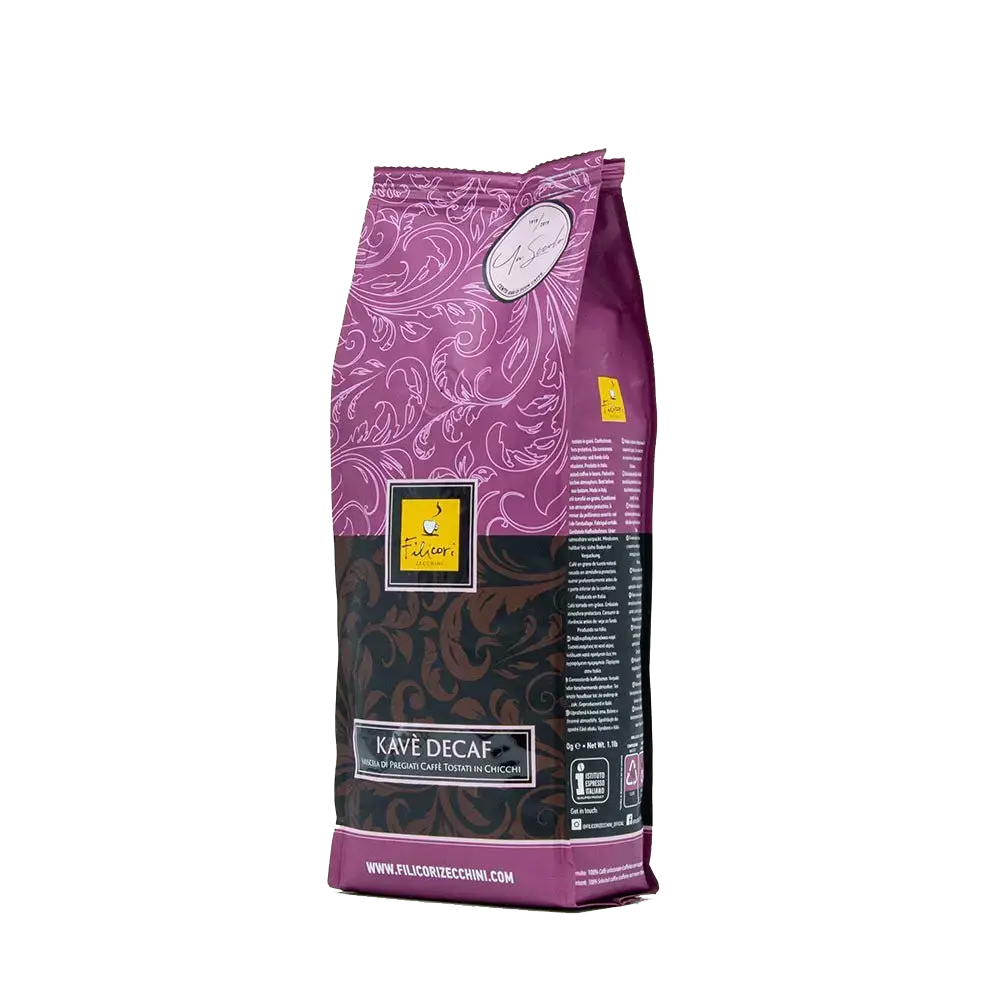
Decaf coffee beans are ordinary green coffee beans that have had most of their caffeine removed before roasting. The beans are then roasted, packed and brewed exactly like regular coffee. Because the caffeine is taken out at the green stage, the roaster still has full control over flavour, body and crema, which is why a well-made decaf can taste remarkably close to the original blend.
Caffeine itself is slightly bitter but carries little aroma, so removing it does not strip away the chocolate, nut or fruit notes you enjoy. What can suffer is the overall balance, which is why roasters usually choose sturdy, flavourful coffees for their decaffeinated blends.
How is decaf coffee made?
There are several decaffeination methods, and all of them start with green beans that are moistened or steamed so the caffeine can move out of the bean. The main approaches are:
- Solvent methods – the beans are treated with a food-grade solvent such as ethyl acetate or methylene chloride, which binds to the caffeine. The beans are then steamed and dried before roasting.
- Water-only methods (often sold under the Swiss Water name) – caffeine is drawn out using water and carbon filters, without added solvents.
- Carbon dioxide (CO2) method – pressurised CO2 acts as a selective solvent for caffeine and is typically used for larger volumes.
You can read a clear technical overview of each process in this guide to decaffeination. Our Kavè Decaf whole bean coffee uses solvent decaffeination, which is stated on the product page so you know exactly what you are buying.
How much caffeine is in decaffeinated coffee?
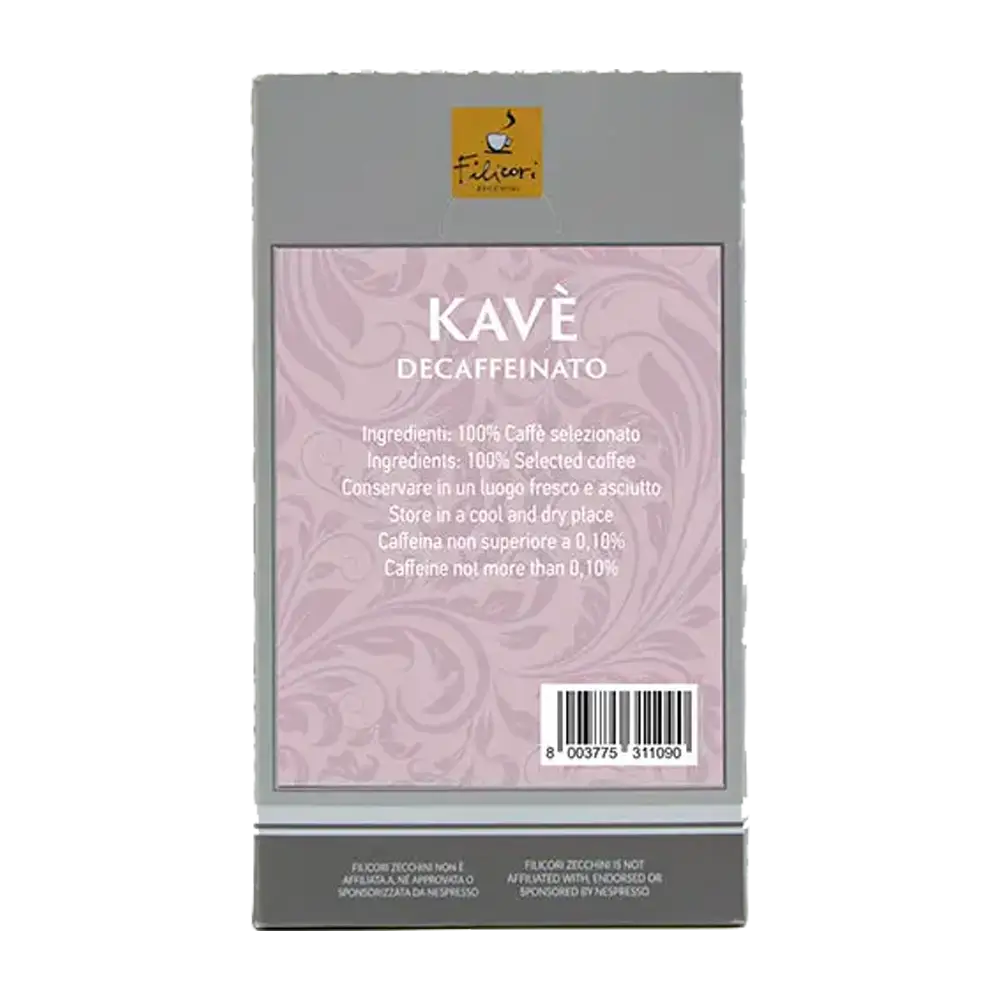
Decaffeinated coffee is not completely caffeine-free; a small trace always remains. The exact amount varies by method, coffee and brew size, so it is worth checking the pack. For example, the box of our Kavè Decaffeinato capsules states a caffeine content of not more than 0.10%.
If you need to limit caffeine for medical reasons, speak to your GP or pharmacist about what is right for you, as decaf still contains a little.
How to choose the best decaf coffee in the UK: 5 tips
With so many options on supermarket shelves and online, these five tips will help you pick decaf you will actually enjoy:
- Whole beans or capsules? Whole decaf coffee beans give you the freshest cup if you own a grinder or a bean-to-cup machine. Capsules are quicker and keep each dose sealed.
- Blend or single origin? Blends are designed for balance and crema, which makes them a reliable choice for decaf espresso.
- Roast level – a medium to medium-dark roast tends to suit espresso and moka brewing best.
- Freshness and packaging – look for packs that protect the coffee from air and light. Kavè Decaf is packed in a protective atmosphere with nitrogen added to help preserve its aroma.
- Independent quality marks – Kavè Decaf is certified Espresso Italiano by the INEI (Istituto Nazionale Espresso Italiano). You can find out more on our certifications page.
Our decaf coffee range
Kavè Decaf whole bean coffee (500g)
Kavè Decaf is a decaffeinated version of our Kavè espresso blend, made with coffees from Brazil, Guatemala and India in a 90% Arabica and 10% Robusta ratio. It has nutty and floral aromas and is roasted for a full-bodied espresso with a satisfying crema. It works in a portafilter espresso machine, a fully automatic bean-to-cup machine or, ground at home, a traditional moka pot. Learn more about the blend on the Kavè Decaf page.
Decaf coffee pods for Nespresso-compatible machines
If you prefer capsules, we offer two decaf options in aluminium capsules compatible with Nespresso Original machines, sold in packs of 10:
- Kavè Decaffeinato capsules – medium roast with notes of chocolate, toasted peanuts, hazelnut and almond.
- Arcadia Bio Decaffeinato capsules – a certified organic blend from Peru, Mexico and India with hints of vanilla, citrus, nuts and toasted cereals.
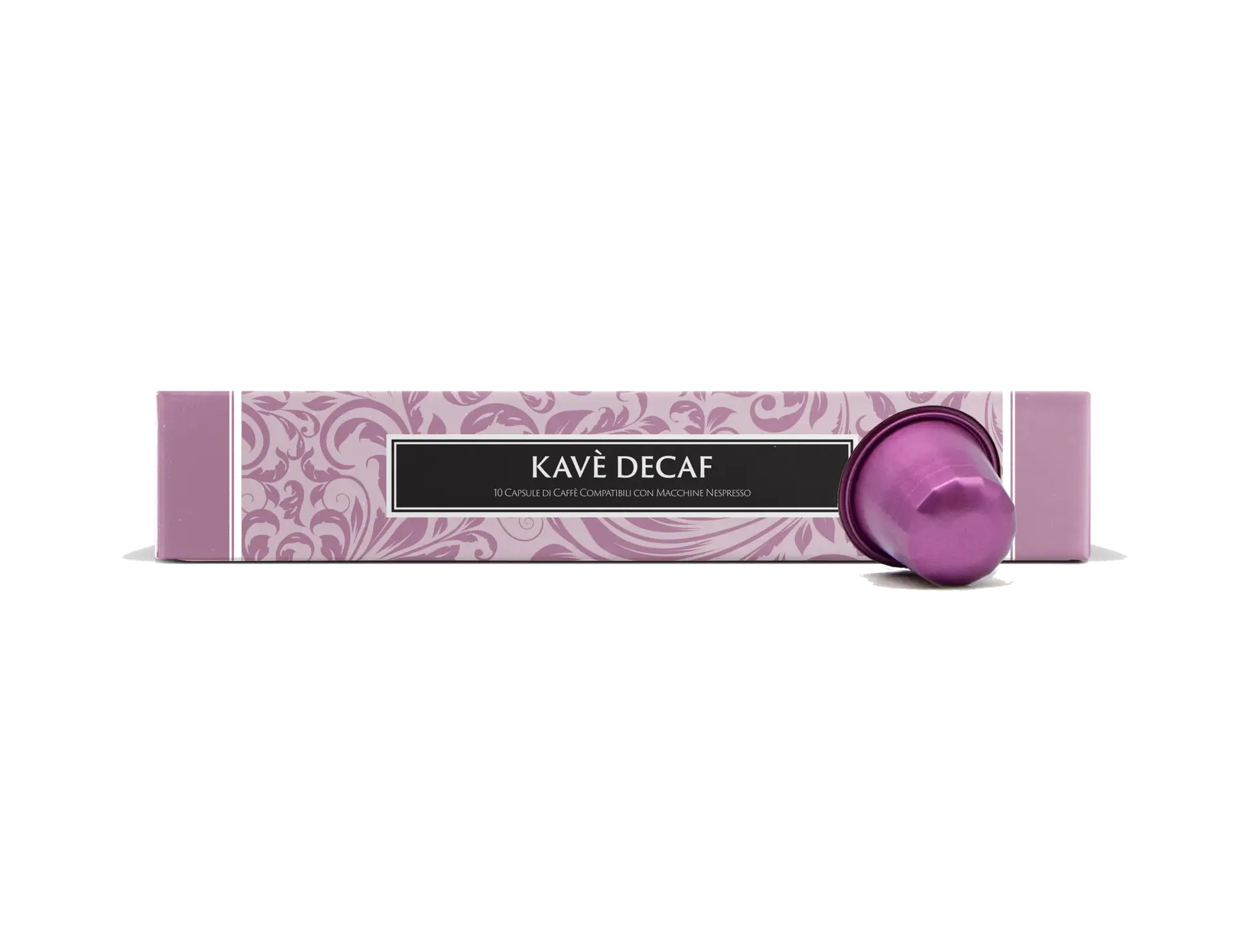
Browse the full range of Nespresso-compatible coffee capsules to compare blends and single origins. Filicori Zecchini is not affiliated with Nespresso.
How to brew decaf coffee beans at home
Decaf behaves a little differently from regular beans. Decaffeinated green coffee is more porous, so it roasts and extracts slightly faster. A few small adjustments make a big difference:
Decaf espresso
- Grind just before brewing and start with your usual dose.
- If the shot runs fast and tastes thin, grind a touch finer rather than adding more coffee.
- Aim for a smooth flow and a golden crema; taste and adjust one step at a time.
Our guide to making espresso at home covers dose, grind and timing in more detail.
Decaf in a moka pot
Kavè Decaf ground at home also makes a rich stovetop coffee. Use a fine grind (a little coarser than espresso), fill the basket level without pressing and brew over low heat. See our step-by-step guide on how to use a moka pot, and check the coffee grind size guide if you are unsure how fine to go.
Storing decaf coffee beans
Because decaf beans are more porous, they can lose aroma a little faster once opened. Reseal the bag tightly, keep it in a cool, dry cupboard away from sunlight and avoid the fridge, where moisture and odours can affect the coffee. Buying a pack size you will finish within a few weeks helps keep every cup fresh.
Is decaf coffee worth it?
For many coffee lovers the answer is yes. Decaf lets you keep the ritual and flavour of an Italian espresso later in the day, offer guests a proper alternative after dinner, or simply cut back on caffeine without giving up coffee altogether. In the UK, decaf coffee has moved well beyond instant granules, and good decaf coffee beans now sit comfortably alongside regular blends in cafés and kitchens. If you run an office or café, a quality decaf on the menu is an easy way to look after every customer.
Decaf has a long history in Europe too: the first commercial decaffeination process was developed in Germany in the early twentieth century. For broader industry information about coffee in Britain, the British Coffee Association is a useful starting point.
Decaf coffee beans: frequently asked questions
Are decaf coffee beans completely caffeine-free?
No. Decaffeination removes most of the caffeine but a small trace remains. Our Kavè Decaffeinato capsule box, for example, states caffeine not more than 0.10%.
Can I use decaf coffee beans in a bean-to-cup machine?
Yes. Kavè Decaf whole beans are suitable for fully automatic bean-to-cup machines as well as portafilter espresso machines.
Does decaf espresso have crema?
A well-roasted decaf blend can produce a good crema. Grind fresh and adjust the grind finer if your shot runs too fast.
How is Kavè Decaf decaffeinated?
Kavè Decaf whole bean coffee is decaffeinated using a solvent method, as stated on the product page.
Do you sell decaf Nespresso-compatible capsules?
Yes: Kavè Decaffeinato and Arcadia Bio Decaffeinato aluminium capsules, both compatible with Nespresso Original machines.
Find your favourite decaf
Whether you grind fresh beans every morning or prefer the speed of a capsule, there is no need to compromise on taste. Explore Kavè Decaf coffee beans or our decaf capsules and enjoy authentic Italian coffee from Bologna at any time of day.