
Knowing how to use a cafetiere properly turns a simple glass jug and plunger into one of the easiest ways to make rich, full-bodied coffee at home. There is no paper filter, no electricity and very little to go wrong, yet small details such as grind size, coffee-to-water ratio and brewing time make a big difference to the cup. This guide walks you through eight simple steps, explains the ratios that work best and shows you how to choose coffee beans for your cafetiere.
What is a cafetiere?
A cafetiere, also called a French press or plunger pot, is a cylindrical jug, usually made of heat-resistant glass or stainless steel, with a lid and a plunger that ends in a fine metal mesh filter. Ground coffee steeps directly in hot water, and the plunger pushes the grounds to the bottom when brewing is finished. In the UK we tend to say cafetiere, while French press is more common elsewhere, but they are the same brewer.
Despite the name, Italy played an important part in its story: one of the best-known early patents for the design was filed by Italian designer Attilio Calimani in 1929. You can read more about its history in this overview of the French press.
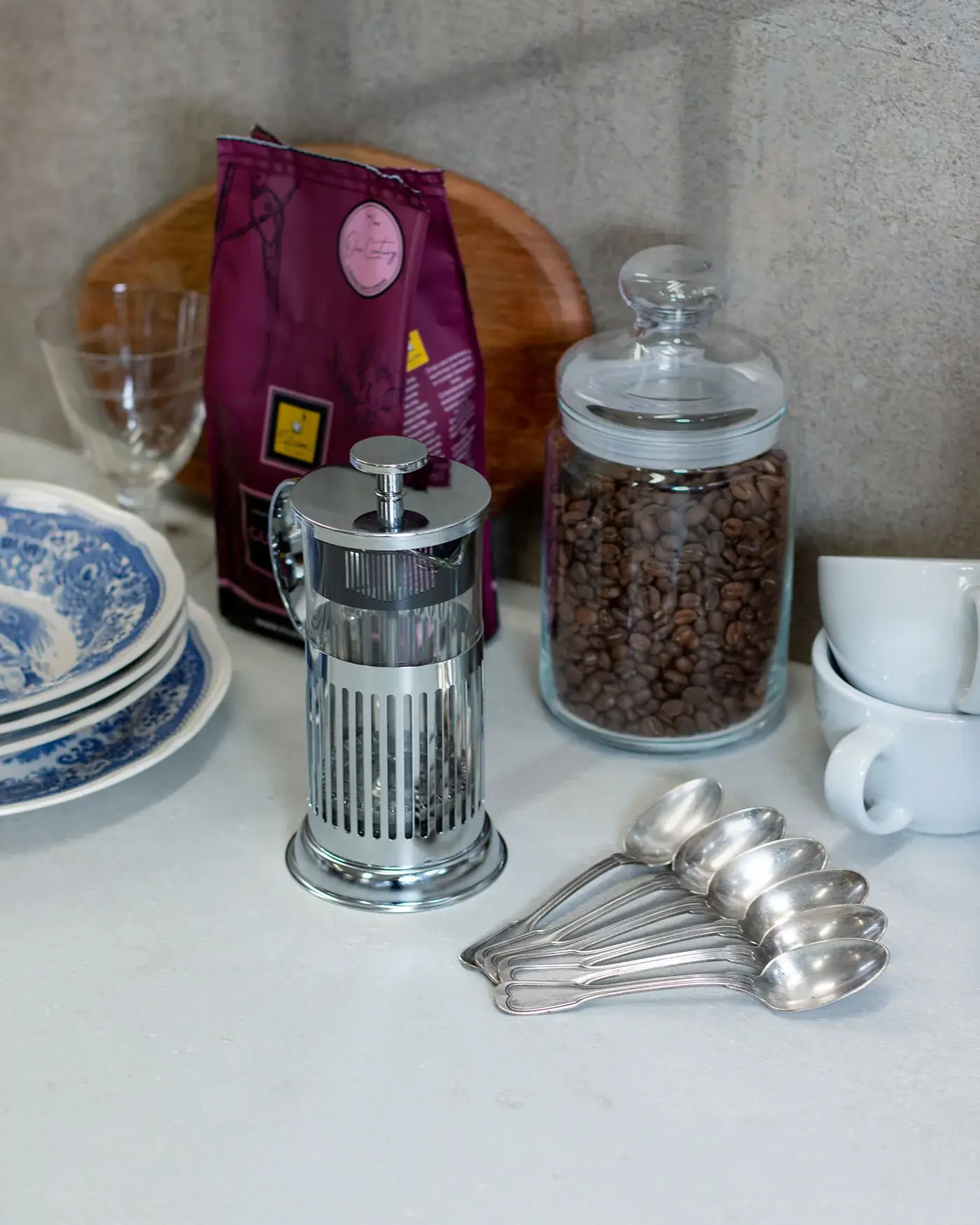
What you need to brew cafetiere coffee
- A cafetiere (any size; a 3-cup or 8-cup model is most common)
- Freshly roasted whole coffee beans and a grinder, or coffee ground to a suitable size
- A kettle and, ideally, a thermometer
- Digital scales or a measuring spoon
- A spoon or paddle for stirring and a timer
Cafetiere coffee ratio: how much coffee to use
A good starting point is about 1 g of coffee for every 15 to 16 g (ml) of water. In practice that means:
- Small 3-cup cafetiere (about 350 ml): roughly 22–24 g of coffee
- Medium 4-cup cafetiere (about 500 ml): roughly 30–33 g of coffee
- Large 8-cup cafetiere (about 1 litre): roughly 60–65 g of coffee
Our own French press brewing guide suggests 15–30 g of coffee depending on the size of your pot. If your cafetiere coffee tastes weak, add a little more coffee next time; if it tastes harsh, use slightly less.
Cafetiere grind size
Because the coffee steeps for several minutes, cafetiere coffee needs a grind that is noticeably coarser than espresso. A medium to medium-coarse grind, similar to coarse sea salt, gives a clean, balanced cup and is easy to plunge. A slightly finer, medium-fine grind (closer to granulated sugar, as our French press guide recommends) gives more body but also more sediment, so shorten the brew a little if you go finer. For a visual comparison of grinds for every brewer, see our coffee grind size guide.
Pre-ground coffee made for moka pots is fine in texture. It will work in a cafetiere at a push, but expect a heavier, muddier cup; grinding whole beans just before brewing gives better results.
How to use a cafetiere in 8 simple steps
1. Heat the water
Boil fresh water, then let it rest for about 30–60 seconds so it is just off the boil, around 92–96°C. Water that is too hot can make coffee taste bitter.
2. Warm the cafetiere
Swirl a little hot water around the jug and pour it away. A warm cafetiere holds its temperature better while the coffee brews.
3. Grind and weigh the coffee
Grind your beans to a medium-coarse texture and weigh the dose for the size of your pot using the ratios above.
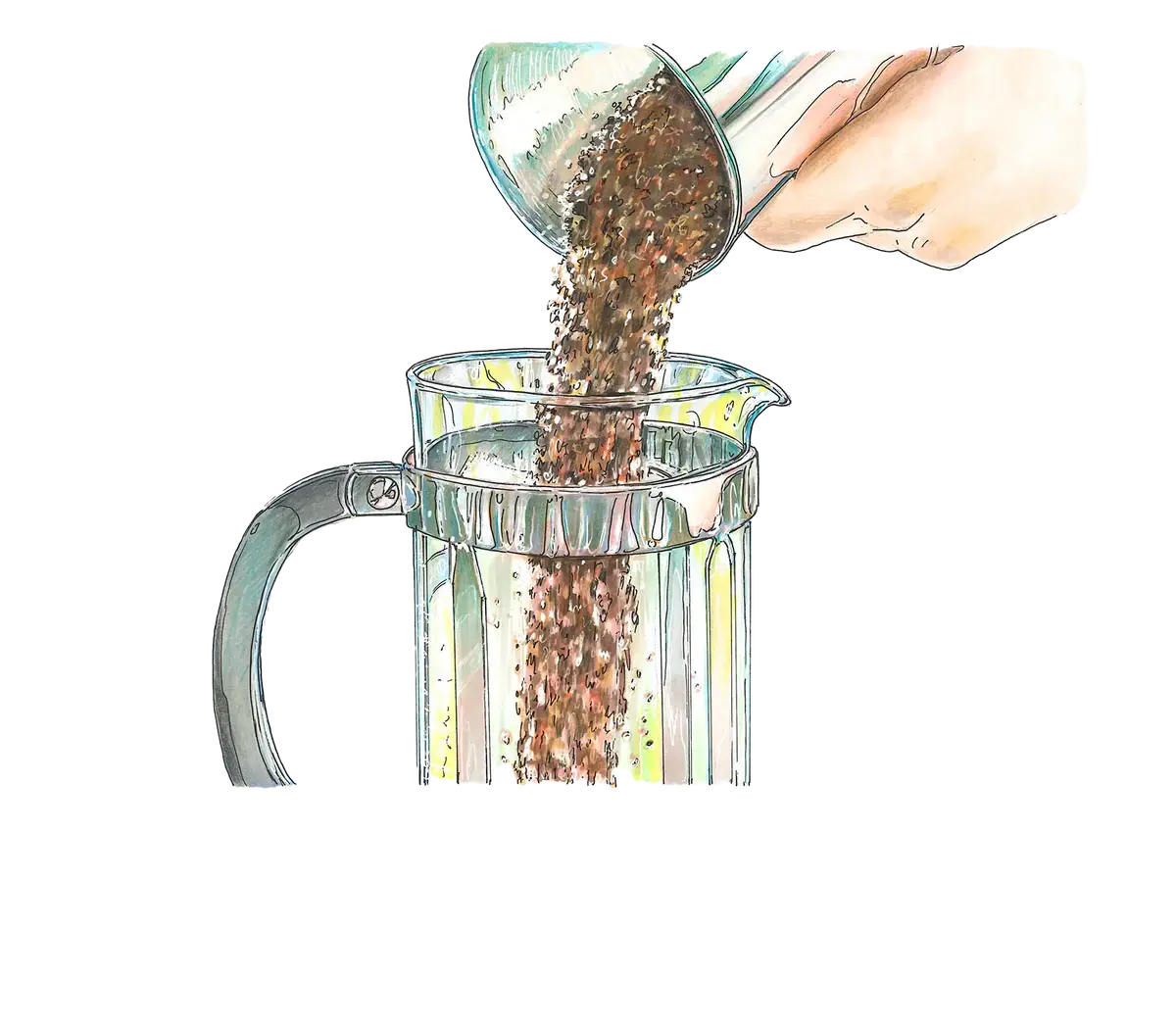
4. Add the coffee and bloom
Tip the grounds into the cafetiere and pour in just enough water to wet them. Wait about 30 seconds; fresh coffee will bubble as it releases carbon dioxide.
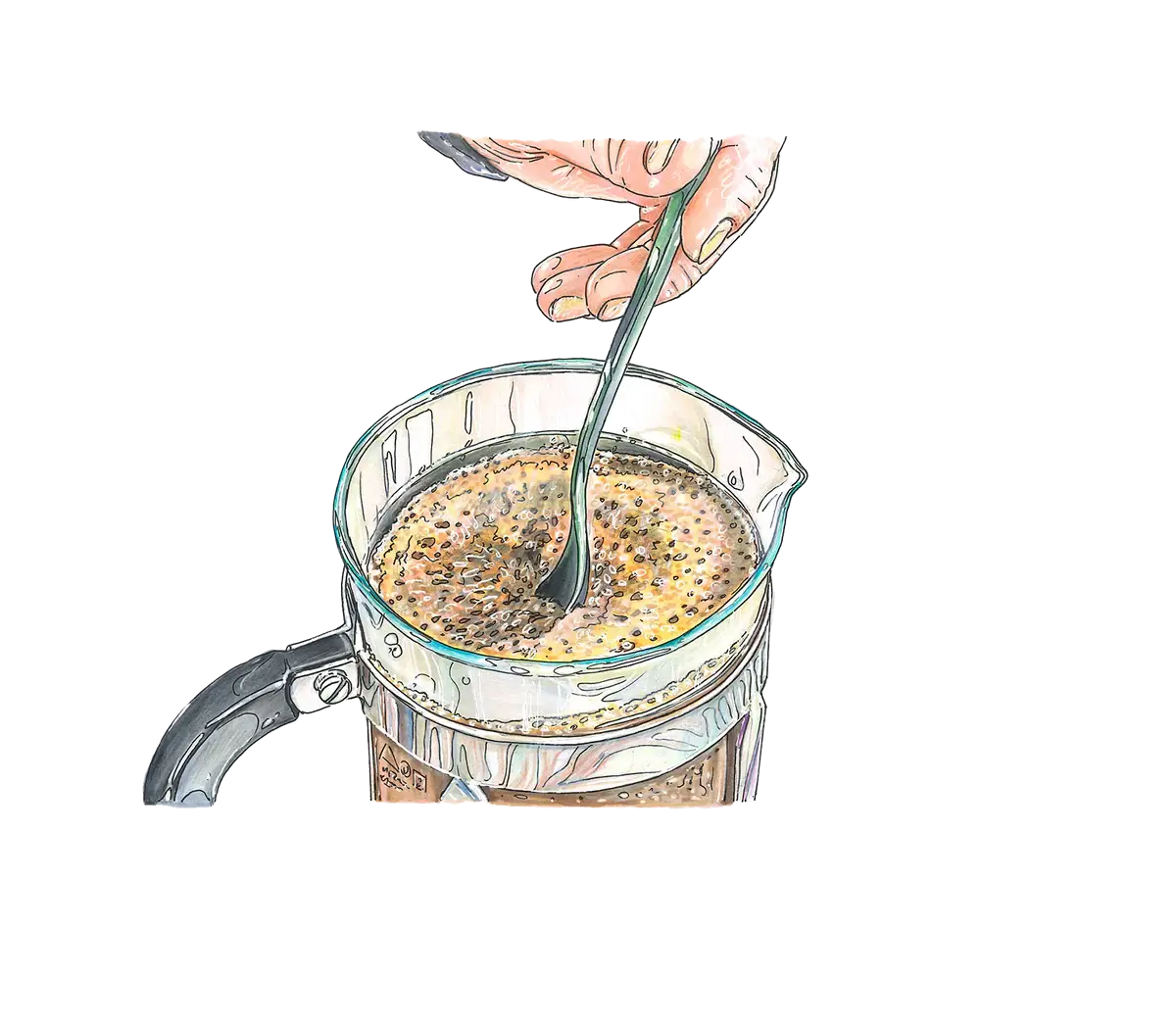
5. Add the rest of the water and stir
Pour in the remaining water, leaving roughly 3 cm of space below the rim, and give it a gentle stir so all the coffee is soaked.
6. Put the lid on and brew for 4 minutes
Place the lid on with the plunger pulled all the way up and start your timer. Four minutes is the classic brew time for cafetiere coffee; go a little shorter for a lighter cup or a little longer for more strength.
7. Plunge slowly
Press the plunger down gently and steadily. If it is very hard to push, the grind is probably too fine; if it drops with no resistance, it may be too coarse.
8. Serve straight away
Pour all of the coffee into cups or a warmed jug as soon as you have plunged. This last step is the one most often missed by people learning how to use a cafetiere. Coffee left sitting on the grounds keeps extracting and turns bitter.
Best coffee beans for a cafetiere
Almost any good coffee can be brewed in a cafetiere, but because it is a full-immersion method it shows off aroma and body particularly well. Our French press guide favours Arabica coffee for the best balance. Some good options from our range of whole coffee beans are:
- 100 Percento Arabica whole bean coffee – a 100% Arabica blend with notes of chocolate, dried fruit, citrus and vanilla.
- Grand Cru Guatemala whole bean coffee – a single-origin Arabica with aromas of vanilla, almond and candied lemon.
- Delicato whole bean coffee – a smooth 80% Arabica, 20% Robusta blend with chocolatey and nutty notes, if you like a rounder, more traditional cup.
Not sure which bean style you prefer? Our guide to Arabica vs Robusta explains the difference in flavour and body.
Common mistakes when learning how to use a cafetiere
- Using boiling water straight from the kettle, which can scorch the coffee.
- Grinding too fine, which makes plunging difficult and leaves a gritty cup.
- Leaving coffee in the pot after plunging, so it over-extracts.
- Skipping the clean – old oils trapped in the mesh filter can taste stale. Take the plunger apart and rinse it regularly.
Cafetiere vs other brewing methods
Compared with a pour-over, cafetiere coffee is heavier and richer because the metal filter lets natural oils and fine particles into the cup. Compared with a moka pot or espresso machine, it is gentler and less concentrated, which makes it ideal for a relaxed mug of black coffee or a large pot to share. Browse all our brew guides to compare methods. For wider coffee knowledge and brewing standards, the Specialty Coffee Association is a respected international resource.
How to use a cafetiere: FAQ
How much coffee do I put in a cafetiere?
Use about 1 g of coffee for every 15–16 ml of water: roughly 30–33 g for a 500 ml pot or 60–65 g for a 1 litre pot.
How long should cafetiere coffee brew?
Around 4 minutes is a good starting point. Brew a little shorter for a lighter cup or a little longer for a stronger one.
What grind is best for a cafetiere?
A medium to medium-coarse grind gives a clean cup. A medium-fine grind adds body but more sediment.
Can I use espresso or moka coffee in a cafetiere?
You can, but finely ground coffee is harder to plunge and leaves more sediment. Grinding whole beans coarser gives better results.
Is a cafetiere the same as a French press?
Yes. Cafetiere is the usual UK name; French press and plunger pot describe the same brewer.
Start brewing better cafetiere coffee
Once you know how to use a cafetiere, great coffee at home takes little more than fresh beans, the right grind and four minutes of patience. Pick a bag of 100 Percento Arabica, follow the steps above and enjoy authentic Italian coffee from Bologna in your favourite mug.